
That would remove a lawful, physical access point to digital currency used by Canadians in communities across the country. We support stronger safeguards, targeted enforcement, and continued work with regulators. We do not support a blanket ban imposed without clear evidence, public consultation, and a serious examination of better alternatives.
This is not just about ATMs. It is about whether Canadians get to choose how they access financial tools, or whether that choice is removed for everyone at once.
The world’s first cryptocurrency ATM was installed in Vancouver in 2013. Canada did not just adopt this technology, it helped introduce it to the world. Today, crypto ATMs continue to provide Canadians with a practical, in-person way to access digital currency.
CoinFlip alone reports:
This is not a hypothetical service. It is an active, national access point used by real Canadians in communities across the country.
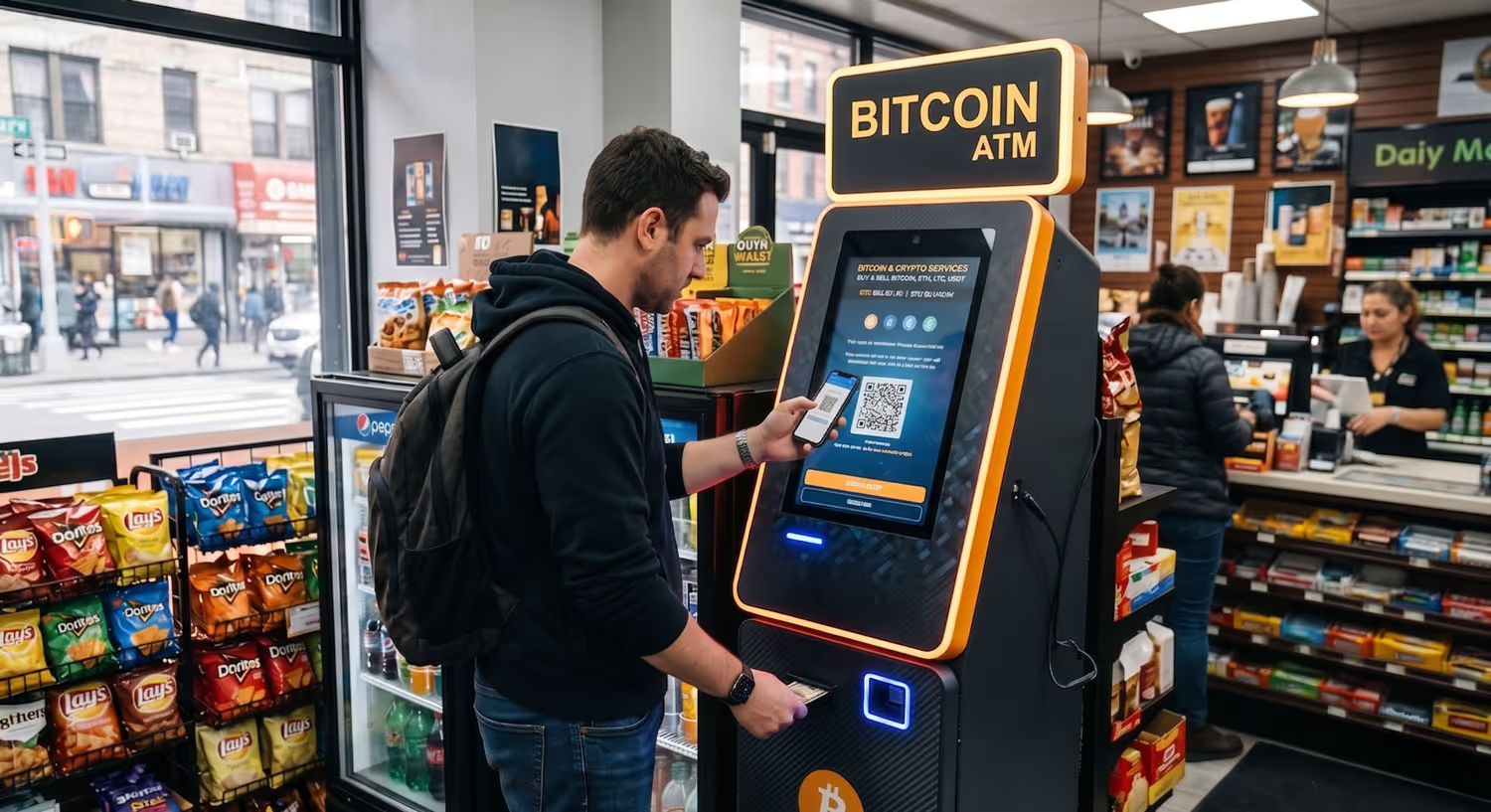
Fraud and financial crime are serious issues and should be addressed directly.But the question is not whether risks exist. The question is whether a blanket ban on crypto ATMs is a proportionate response.We do not believe it is.
A more constructive approach would focus on:
Using publicly available Canadian Anti-Fraud Centre totals for 2024, approximately 91.3% of reported crypto-related fraud was linked to other parts of the ecosystem, including online scams, exchanges, payment apps, and other digital platforms.
Public reporting has stated that crypto ATMs accounted for only approximately 8.7% of total reported crypto fraud and 2.2% of total reported fraud in Canada in 2024.
For these Canadians, this is not an abstract regulatory change. It is the loss of a lawful service and one less option in an already concentrated financial system.
Those services remained available to Canadians through thousands of locations nationwide, including more than 5,000 Canada Post locations, more than 4,300 MoneyGram agent locations, and more than 330 Walmart locations offering Western Union services.
That is what proportionate regulation looks like: stronger safeguards, real accountability, and continued access for legitimate users.
If Canadians say nothing, Ottawa may assume there is little public concern.If enough people speak up now, MPs will hear that a blanket ban is not a balanced response and that Canadians expect a more reasonable, evidence-based approach.
Email your MP today![[background image] image of a desk with tech gadgets (for a ai developer tools)](https://cdn.prod.website-files.com/69f36aebe52a48df1bc6ec47/69f37fab88079f4f3ff75068_Ottawa-only.avif)